
Going Dark, Finding Light
Lost comms and a failed water pump made our passage from Fiji to Vanuatu more challenging than planned
Our sail last week from Fiji to Vanuatu was quite a trip.
We left Fiji on Tuesday, June 23 at 12:00 noon for our 450-mile open ocean passage to Vanuatu. By 3:00 pm we were approaching the pass to leave the archipelago. It was quiet inside the reef, but there was a big headwind off the end of the island and a big swell running outside. A cargo ship was coming up on our stern as we approached the pass, so we gave way to let him go by us. Tonnage rule always wins.
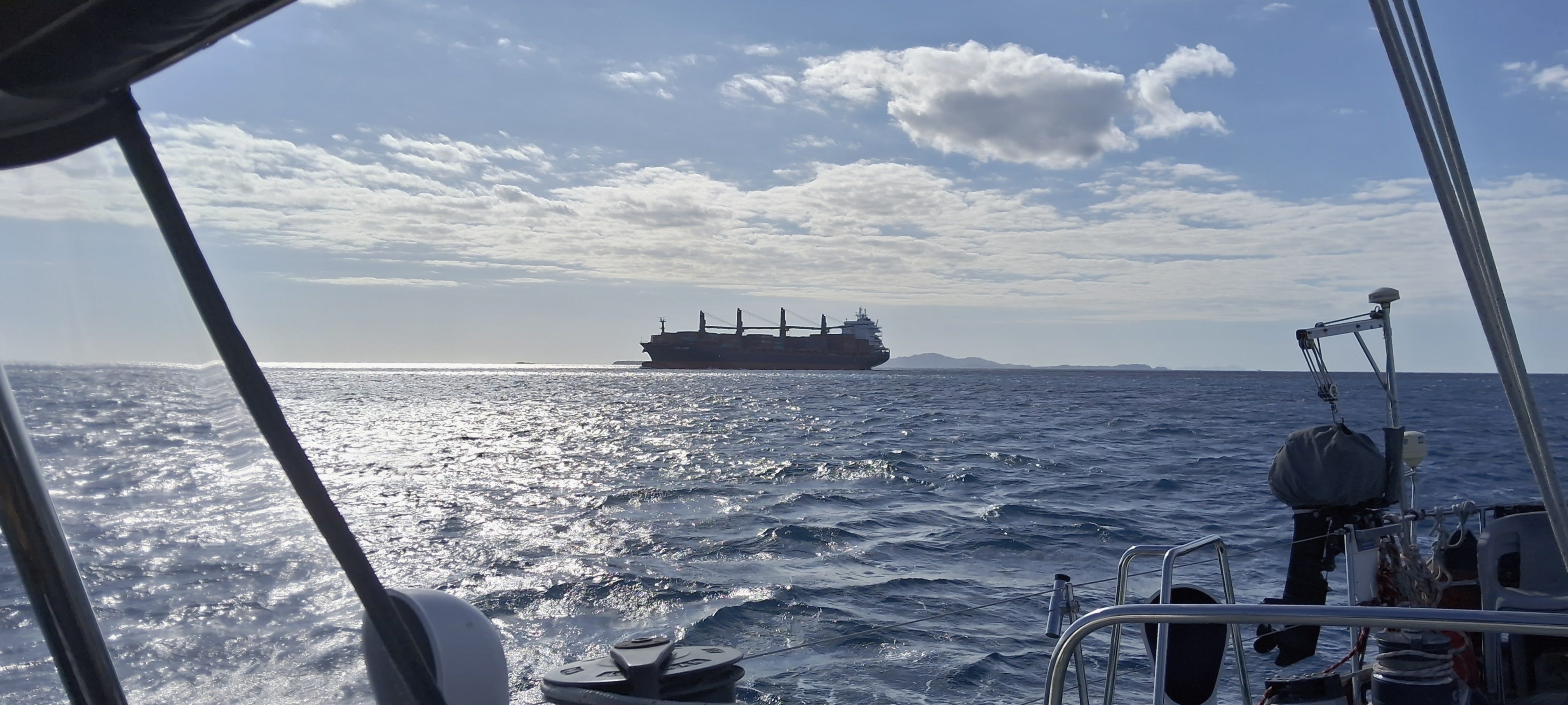
I’ve mentioned before that “men and ships rot in port”, and our lack of sail time revealed itself. We paid a couple of penalties as we were getting started.
First, we had our preventer lines set but not connected to the line on the end of the boom, so the Captain had to go up on the cabin top to get it down – in a 2-meter swell with a steeply rolling boat. But we got it done, and safely set the sails for a fast start.
Then, we realized we had forgotten to turn on Ocean Mode on Starlink. We had passed the 12-mile offshore range, so we were without comms, but not about to turn back into that big sea. We just resigned ourselves to the idea that we would be old-timey sailors for the passage. No internet.
On Wednesday morning, we were delivered a new surprise. We’d just finished coffee and cereal, and were in a nice groove, motor sailing at 8.5 knots in just under 10 knots of wind when we heard a strange noise from the engine room and an immediate smell of burning rubber. Never a good sign.
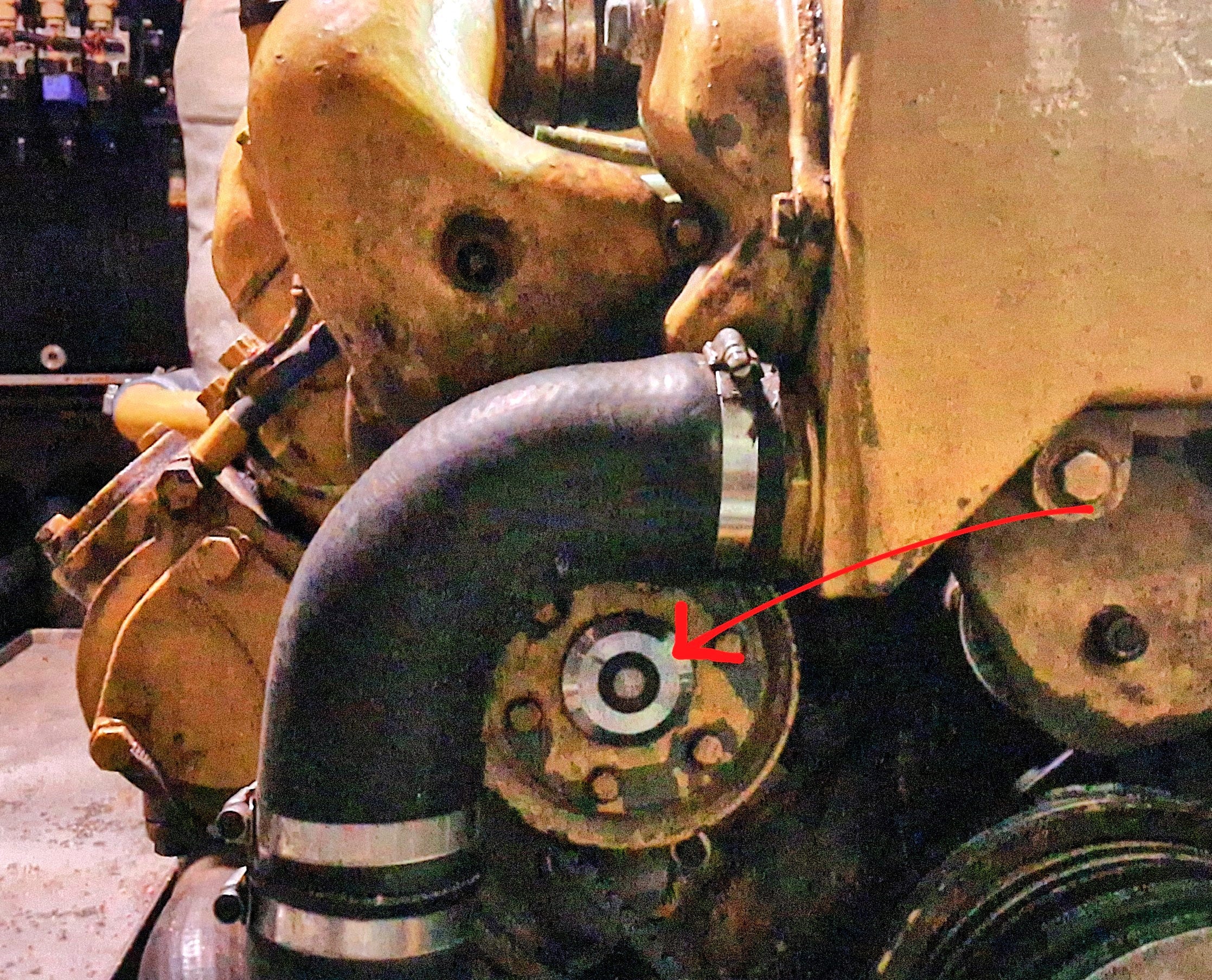
The Captain ran below and opened the engine room hatch and determined that the freshwater pump on our main engine had failed. This was serious.
We shut down the engine and got the boat sailing with main and staysail. Luckily the wind was favorable, and we were more or less on course. Also, we were in luck with the sea conditions - it was a calm day, with seas less than a meter.
Next, we evaluated our situation. By this time, we were 125 miles from Fiji, and we both agreed that going back would not be an option. We were sailing on course, but slowly – it could take many days to get our destination in Vanuatu, but there was an anchorage there that we would be able to sail into and drop anchor, even without our engine. So, sail on it was. Which made it even more old-timey. No internet and no engine.
Last year, before we left North America, the Captain had the foresight to order a replacement pump as he suspected that it’s days might be numbered and didn’t want to be caught without a spare on board. It’s not trivial to replace – especially underway, but we do have a shiny new replacement pump, the gaskets, the required tools – and most importantly – the skills to do the repair. Thank you, Captain.
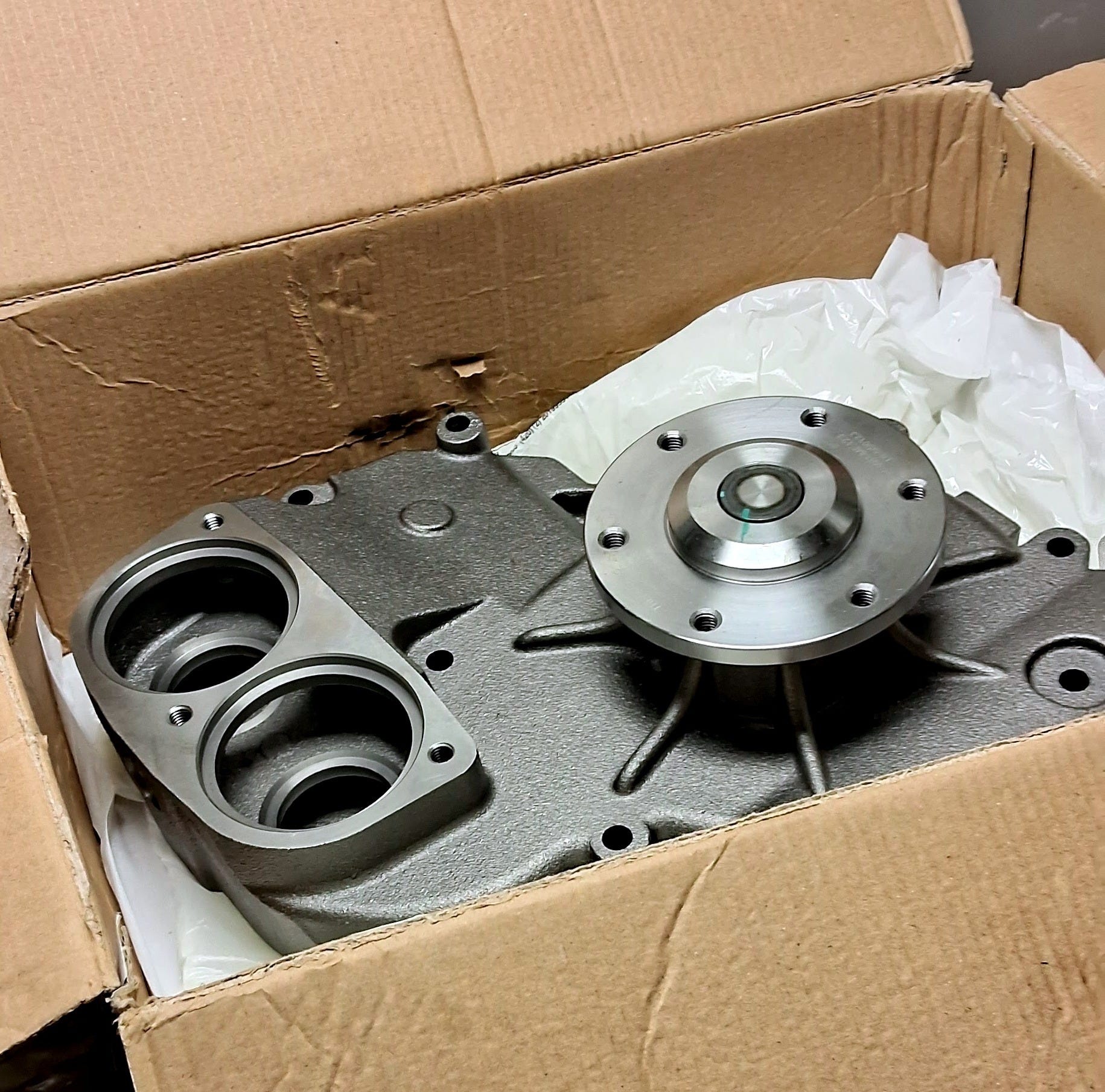
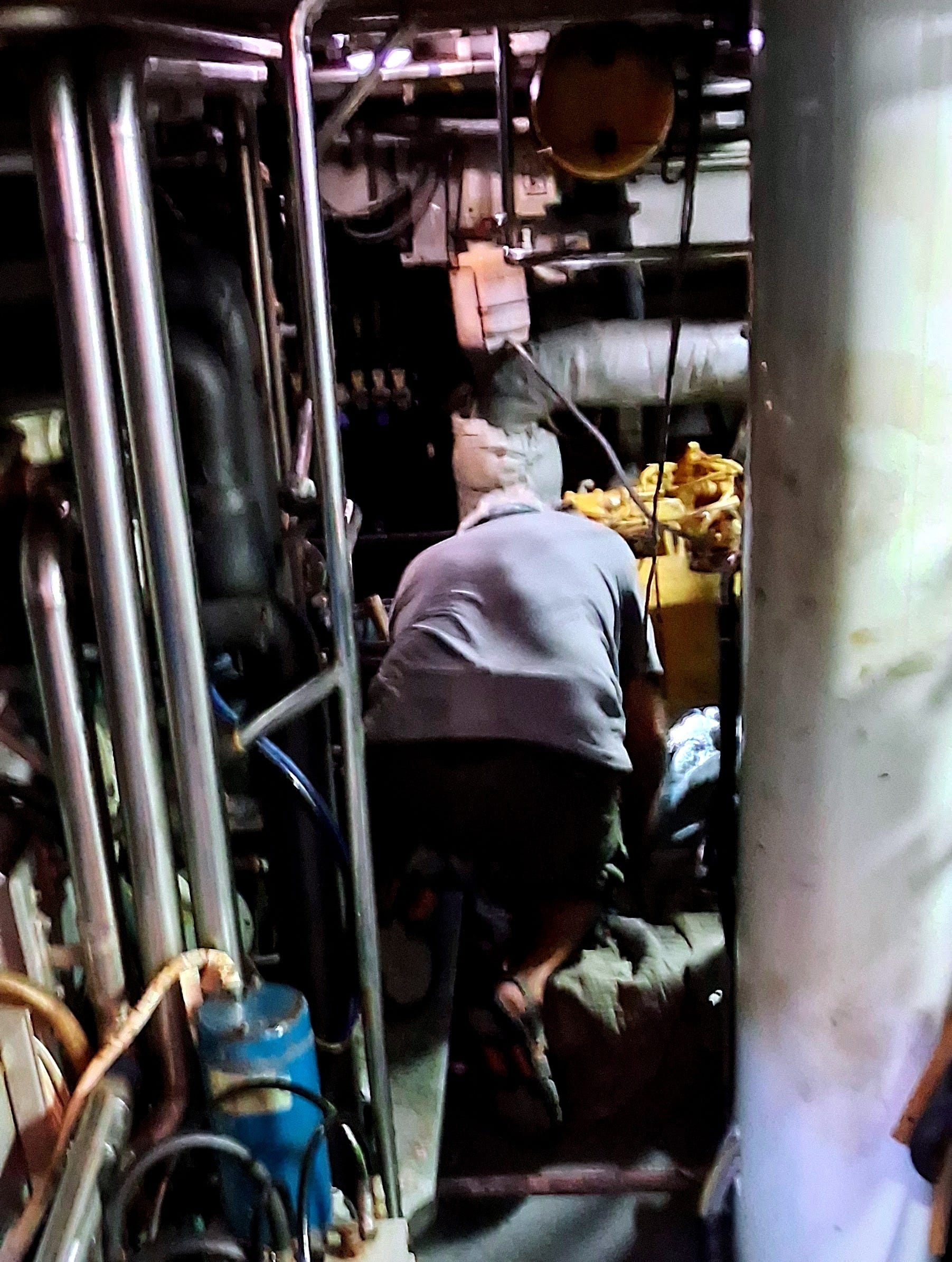
As a first step, he had to make sure that all the bolts that hold the pump to the front of the engine would come free without breaking. This pump had never been replaced before, so there was a chance that some of the bolts would be seized. Picture the Captain on his knees wrestling with a 20-pound cast iron water pump in front of an engine that has been running for 24 hours, hot enough to slowcook a brisket.
I was up in the pilothouse, keeping the boat moving, sailing along at 4 – 5 knots. There was no life as far as the eye could see – and a few squalls on the horizon. A few errant boobie birds cruised past. There was not another boat, sail or power.
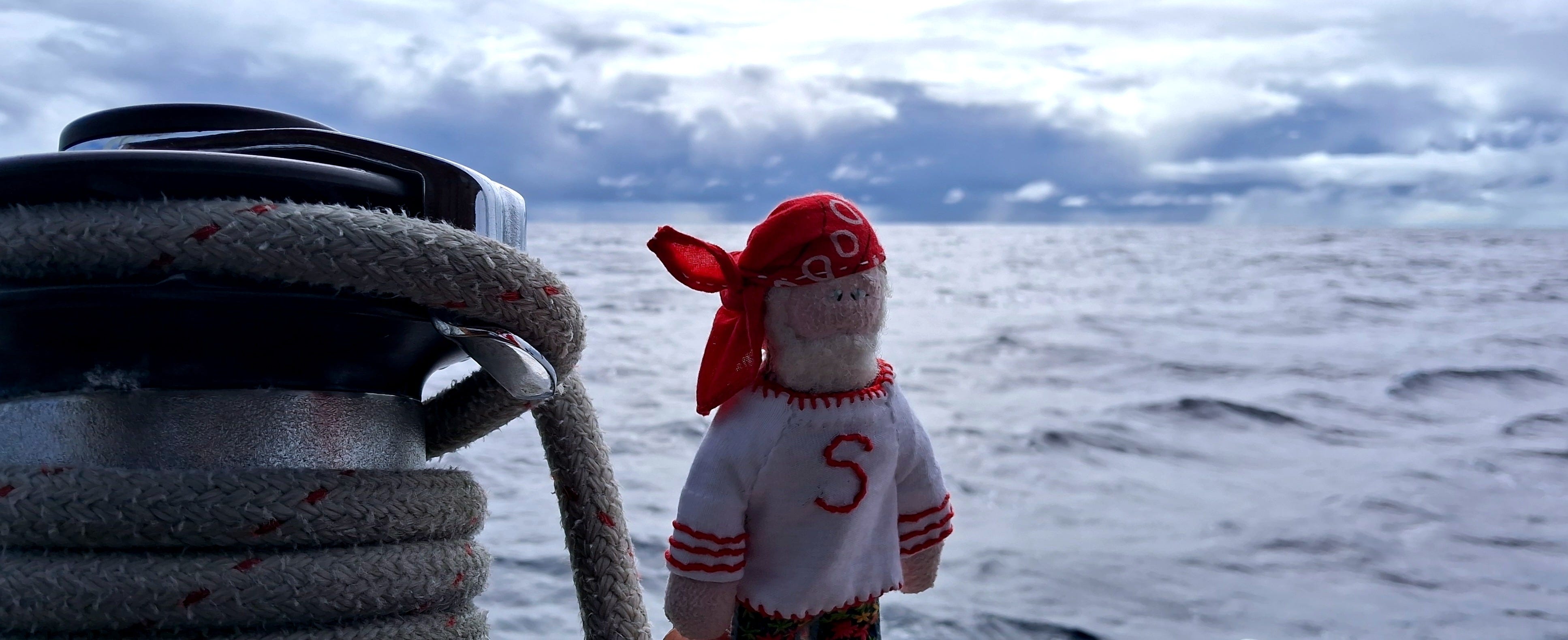
I had a fantasy of seeing another boat and hailing them over to use their hotspot to log in to our Starlink and get back online. But the ocean was empty. More people climb Mt. Everest than sail around the world, so we are mostly always alone out here. And even if we could let someone know what was going on, there was nothing that anyone could do to help. This was a situation that we had to resolve on our own.
After a few hours, the Captain came up out of the engine room with a smudge of dirt on his nose, but a big smile on his face, and the confidence that he could wrap the job up successfully. The deinstallation would start in the morning.
Wednesday night brought one of the most beautiful night watches I’ve ever had. The sails were luminous in the moonlight; the waxing moon overhead was like a spotlight at the top of our mast. There was a little squeaky-toy sounding bird following me, sounding for all the world like a dog toy lost by some cosmic pooch. I wasn’t missing the internet, I was more aware of what was right there, right then. The night sky was like dark blue velvet with only the brightest stars showing at first glance, but if you stare long and hard, little tiny dots of light show up in the in-between spaces. A zillion points sprinkled the dome above, cascading all the way down to the horizon that surrounded us. No other visible creatures. No other boats. Just Squeaky Bird.
We weren’t distracted by the thought of using the engine when the wind dies down a bit. We were just happy to sail and get there when we get there.
This experience was turning into a respite for us both. The break from the internet and the opportunity to just sail was amazing. It’s the longest we’ve gone without being connected for ages. This is how we used to sail – no constant information, just our downloaded grib files for weather and our navigation instruments.
Over the next three days, we continued sailing and slowly worked through the repair job. The Captain was in and out of the engine room during the day, methodically and precisely taking the old pump out. I kept the boat on course and helped where I could as wrench monkey and tool fetcher. And I kept us fed1.
We shared night watches, our usual shifts of three hours on, three hours off. At 3:00 am on Thursday morning the ocean under us was 9,843 feet deep, and we were floating on a sea of glass. There was no wind. We had a tiny main sail out for some stability in the ever-present swell. The nebulae of the Milky Way were comingled with the clouds, until your eyes couldn’t perceive the difference. The setting stars deceived us into thinking that they were boat lights on the horizon, before they disappeared.
After sunrise on Thursday the prevailing trade wind slowly started to fill in again. Seamus and I were at the helm, and we had a marvelous day of smooth sailing with no swell to speak of and wind waves less than a meter – broad reaching along at 7+ knots. If we were going to ask for optimum conditions to do a big repair at sea, this would very much be it.
By this time, we had made enough progress to feel confident about the repair, and it felt so relaxing to be off line – to sail with just the sounds of the ocean as our soundtrack. It felt wonderful to just sit and watch a rainbow – with our eyes, not through a screen. We weren’t tempted to check on who might be doing what to someone else. There was no bad news, our whole world was what we had on our boat and the wonder that surrounded us. This is what life is all about, this is the real world – for us lucky sailors anyway.
I double down on the answer I gave my friend Aisha last week when she asked the question, “What would it take to make your life exceptional?”. My answer was, “My life is exceptional”. On this day of the passage, I felt it a thousandfold.
The passage continued, and our repair progressed.
We spent most of Friday cleaning off the old gasket, cleaning and degreasing all the bolts and washers and then starting the reassembly. This part took both of us – the pump is heavy and it’s no easy task to align bolts with the bolt holes that you can’t see when everything is moving, and you are crouched down in a small space. If you drop anything, it goes five feet down into the bilge under the engine, and you’ll never get it back. So don’t drop anything.
We finished up the day literally lying on the floor of the engine room putting the heat exchanger back in position. It was, as they say, a bitch. This whole repair experience is without a doubt the biggest, hardest job we’ve ever done – while sailing!
The sea was much bigger than the day before, but it actually felt calmer down in the engine room as it’s the bottom of the fulcrum. But every now and then the sound of the water rushing past the hull would get louder and I’d go up and look around to make sure all was well with our sailing. It always was - the autopilot held strong, and we were always steady on course. Our speed was 7 and even 8+ knots sometimes.
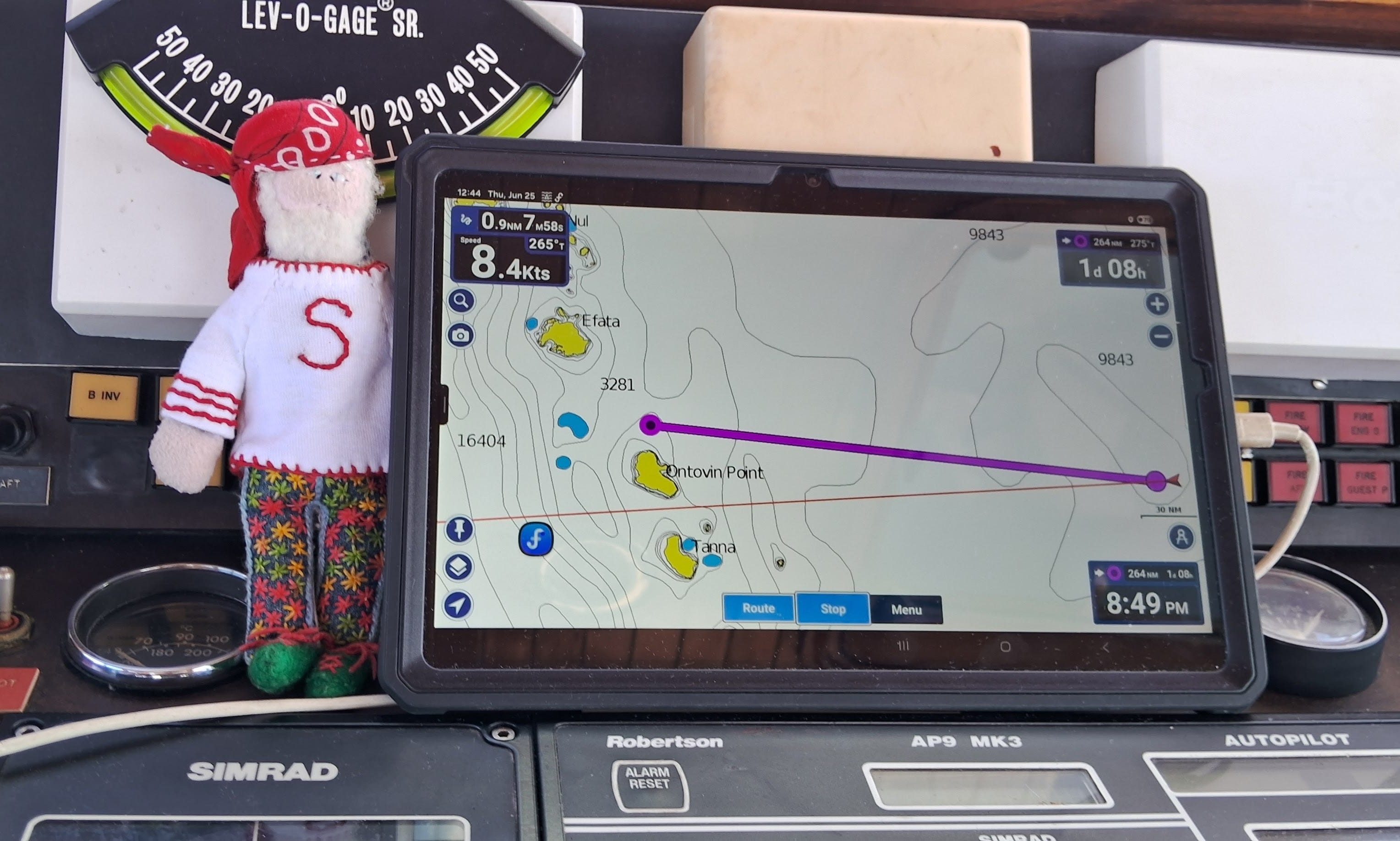
From noon on Thursday to noon on Friday we covered 153 miles, which we call respectable, considering we were also doing a major repair.
By late Friday afternoon we were 95 miles out of Vanuatu, and had the pump mostly installed – all 22 bolts and washers were back in place and secured. We set our course to arrive in Port Vila, where it would be possible to sail in and anchor under sail if the engine didn’t start. We were writing the happy ending at this point, not thinking about the worst case, but prepared if need be.
Saturday at 5:00 am we made it to the north end of Erromango Island, close enough to get reconnected with our Starlink service. I was able to make a quick client call, but then it was back to the business of getting our engine running. We still had 60 miles to go to Efate Island and the harbor of Port Vila. The sea had gotten much rougher overnight, making it too difficult to work in the engine room. We had to heave to2 in order to calm the boat down enough to be able to finish up the repair job.
We got the pump connected to the engine, installed the rest of the parts, and filled it up with water. By 3:00 pm we were ready to give it a try. We started the engine, and I cried real tears of joy when it ran. The Captain had to make a few more adjustments to get things right, but there were no leaks and the temperature held steady.
We declared success.
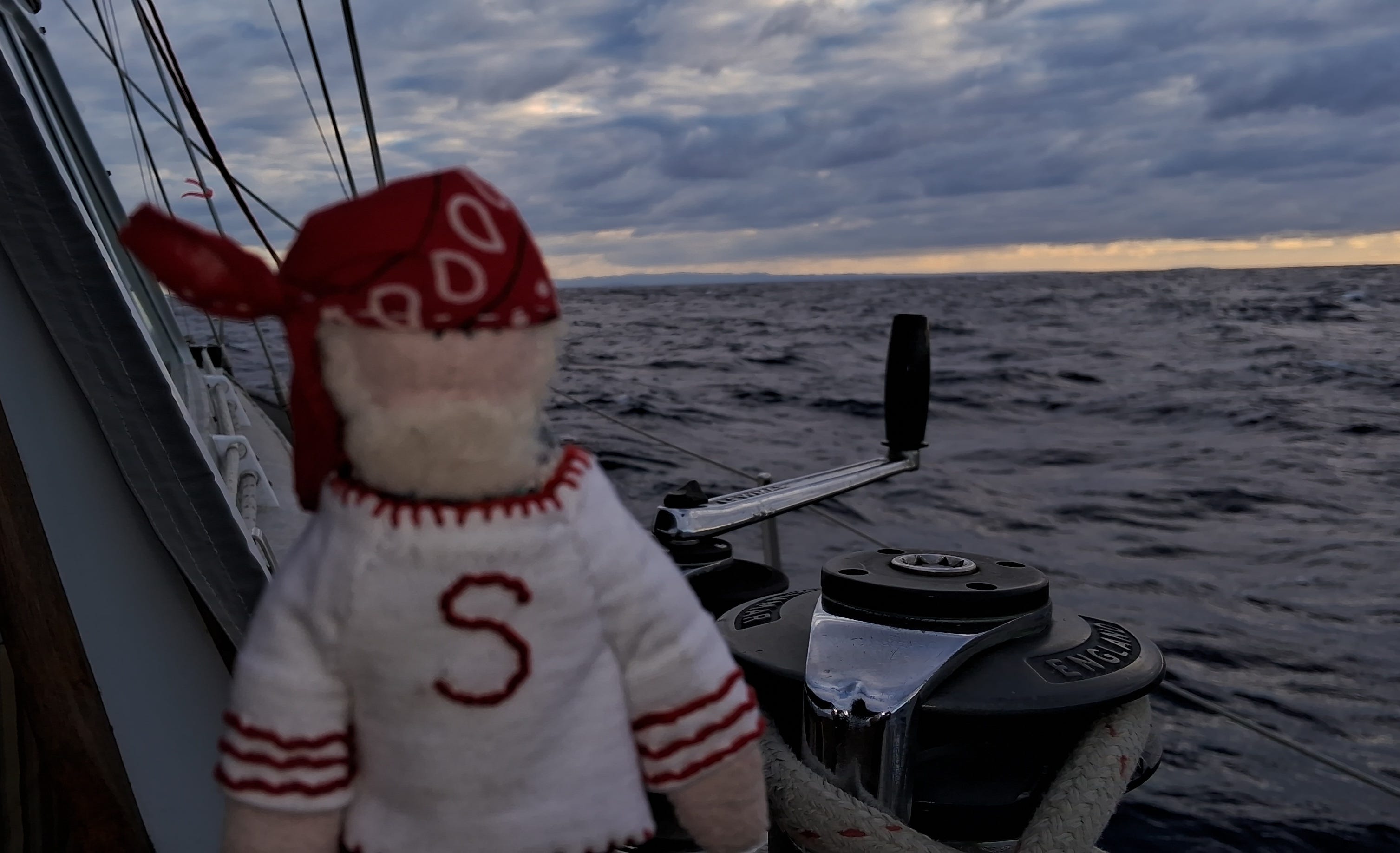
But Neptune wasn’t done with us on this passage. There was a 3-meter cross swell and we were having a hard time making way.
At the speed we were going, we wouldn’t arrive in Port Vila until well after midnight, and in our exhausted state we didn’t want to risk going into an unfamiliar harbor in the dark. So, we decided to heave to again, and just drift for the night and get some much-needed sleep.
At dawn on Sunday, we fired up and had a fast motor sail for the last 15 miles into Port Vila.
We were anchor down and engine off at 11:30 am on June 28, almost exactly five days after leaving Fiji.
It was a wild trip, but it was also enlightening. Once again, we proved ourselves to be resilient and capable sailors. We successfully completed a repair that many people could not accomplish even in the best of conditions, and we did it on an open water passage, while sailing.
More significantly though, going dark showed us the light. Our four-day forced digital detox was therapeutic. We felt happier and less stressed. Going forward, we’re determined to spend less wasted time online – and more time being present in this wonderfully real world of ours.
Sail on Fearless Crew! - LJ
The most important contribution to a happy crew… From lasagna to chicken stew to ramen to egg salad sandwiches, fresh bread, and fresh baked cookies - this passage had it all. And man, did we need it.
“Heaving to” is a heavy weather maneuver that quiets the motion of the boat and keeps it moving slowly with the wind and waves. We sheet the staysail tight on the port tack and steer the boat into the wind until the staysail backs and then put the helm all the way over to weather and lash it in that position. It is magic – the motion slows, the roll is minimal, and we start sailing slowly downwind toward our course line.

If you liked this essay, you might also enjoy….
A Big Ocean Passage from Wallis to Fiji

Some days at sea are just survival. You’re out there, and you can’t make it stop – so you just do what needs to be done.
Why Our Boat is Called “Duende”

Boat names are interesting to study. Some are meant to be funny; some carry personal meaning for the owners. On our boats, the rule has always been that it should be easy to say three times – for VHF radio calling, and it should be easy for non-English speakers to understand and pronounce – as our travel is international.
Big Boat, Small Crew

Our life on SV Duende is different than that of many sailors and ocean adventurers.

About Shellphone Chronicles
I write weekly essays that feature tall tales from the high seas, beautiful photos, original artwork, and occasional poetry. We are a crew of two, enjoying countless adventures on SV Duende, an 80-foot expedition sailing yacht on a multiyear ocean voyage.
To all my constant readers, thank you for coming along on this voyage with us. I love sharing our stories with you.
If you are new to the crew, welcome aboard! I’ve put together a Start Here page — a roadmap to guide you through some of our most popular essays and provide a few binge-worthy series suggestions. It’s a fun introduction to the themes that we weave through our life on the deep blue sea.
That was a fascinating read. Having those moments of panic amidst all that beauty, that is really living.
No words. Other than to channel Leonard "There is a crack, a crack in everything. Its how the light gets in..." Just fabulous. Thx for sharing Linda 🙏