
How has travel changed?
The democratization and Instagramableness of international travel. For better or worse?
This is the third bi-weekly letter exchange in a four episode pen pal log between Linda on Duende at Shellphone Chronicles and Nicola at GlobeFoxing.
One of us navigates the world by sail, the other by flight, but both are interested in what lies off the beaten track. From Sea Level to Cruising Altitude is a series on travel done thoughtfully — examining how movement, in its many forms, reshapes perspective, belonging, and the lives we build.

Part 3: Letter from Nicola to Linda — Claiming travel back
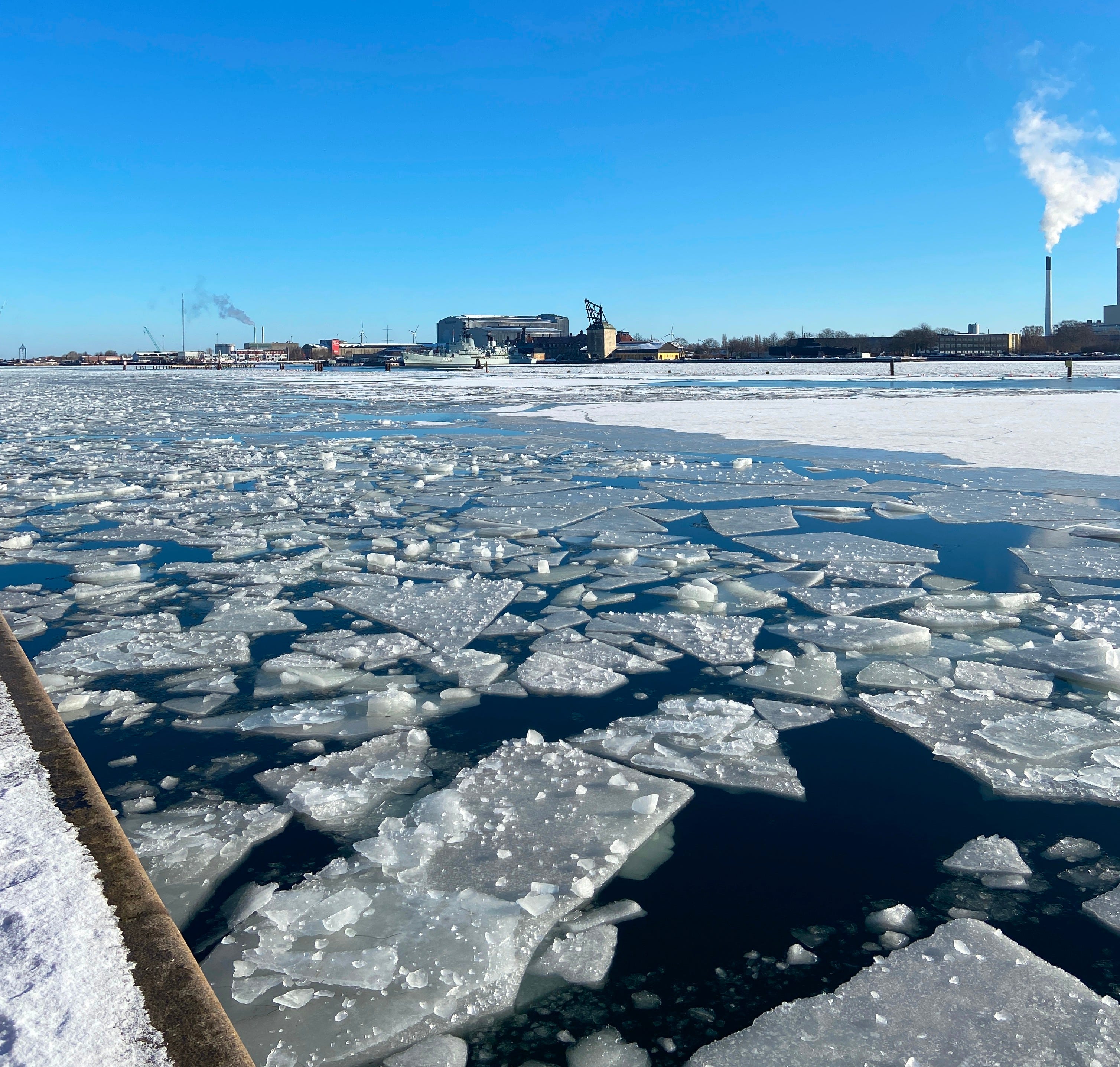
Dear Linda: I trust you are still enjoying the summer in Fiji! We’ve finally rounded the bend on winter here in Copenhagen and we’re experiencing positive single-digit degrees. The snow is melting and the days are getting longer. I can feel the extra dosage of vitamin D slowly working its way back into my system.
I really enjoyed our last exchange about the purpose of travel and was overwhelmed by the reception from our readers, who all had something positive to add. It also prompted me to reflect on how travel has undergone a series of dramatic changes over the last decade.
The democratization of international travel — through more competitive flight options and fewer travel restrictions — has completely transformed the nature of how people get around. More people are traveling for leisure than ever nowadays, which I would argue is, all in all, a great thing for society. Fifteen years ago, it felt rare to meet Americans who had left the country. Now it seems more common to go to Europe than to visit Mickey Mouse.
This has come with its fair share of friction. Travel has become noisy. It is more and more concentrated in the same places – namely, the cities and seaside resorts people’s social media algorithms are telling them to go to. This has added an intense strain to local populations, visible in everything from housing costs to resource usage. More and more people are traveling to where they are supposed to go rather than where they want to.
There used to be two primary reasons for people to go on vacation: 1. to relax, unwind or decompress and 2. to discover somewhere new. Nowadays, a third reason has eclipsed all the others: to say you have been there.
My primary culprit for this transformation is the ‘influencer craze’. What I call Instagram vacationers usually follow a similar pattern. They view a reel posted by a so-called travel influencer — with hundreds of thousands of followers and a blue tick on their profile — of an empty coast in Thailand, a gate opening onto the peaceful waters of Lake Como or a perfect mountain landscape in Georgia.
Then, they book the trip on the back of the influencer’s word without conducting any further due diligence or weighing up their personal preferences, only to arrive at said location and be surrounded by throngs of others attempting the same unencumbered manicured photo shoot. They sweat buckets in the heat, not realizing that their favorite influencer had woken at the crack of dawn to pose for their advertised shot and spent three hours editing it. Then, they cut forlorn figures while sitting at their five-star hotel that does not look at all like the pictures (also recommended by their influencer), where prices are up +3,000% due to the influx of other Instagrammers.
As it turns out, the Instagrammableness of something is an actual thing. Look around. You will see tourists queue to take pictures of random condominium doors simply because they are old, made of wood and an unusual color for a door. Two friends will hand their phone — pre-programmed to the correct zoom length — and provide detailed instructions to a random stranger. They will then line up on either side of the door, frame it with their hands and sometimes smile directly at the camera, but usually look at each other pretending to be laughing at something the other did not say. This is textbook Instagram: the ‘let’s pretend to be having fun while all we are doing is trying to get more likes-shot’.
Seriously, what are we doing?
This is what I call traveling for the algorithm. We can all be better than that. We owe it to ourselves and local tourist economies to be better than that. We need to question influencers (although there are some good, original ones out there… the pioneers, the ones that didn’t get into it for clicks and likes but saw that as a natural evolution of creating engaging material).
What qualifies an Instagram influencer to tell everyone where to go? Is their goal a perfect vacation for you or is it to create viral monetizable content for themselves? How are they held accountable for accurate advice and recommendations? How off-the-beaten-path is a place that is being showcased on the Instagram reel of someone with three million followers that may have just been passing through the location for twenty-four hours?
Also, sidebar: What even is an influencer? Wasn’t it people like Rosa Parks, Nelson Mandela and Joan of Arc that used to play such roles? What does it say about us that anybody with a blue tick who posts filtered images of their hotel room toilet now holds such a status?
The number of first-time clients who reach out to me with destination “advice” they have found while scrolling Instagram is inconceivable. Over the last ten years, the pendulum shifted too far in favor of ‘travel content’ that, as it turned out, was maximized for algorithms and not for genuine connection or storytelling. Now, there is a need for a correction back in favor of authentic travel to real places by real people.
I would challenge everyone to claim travel back from the algorithm. No more checklists, no more likes. In with the real stuff. The appetite for this correction is what I have built GlobeFoxing on and I plan to keep doing that, even if it might not get me all the likes that the picture of my hotel bathtub would. You can call me the Anti-Influencer.
My question to you this week Linda, is whether you have seen similar trends in the sailing world? Has social media also painted circumnavigating the globe as something glamorous while leaving out how grueling and high-skilled the task can be?
Curious to hear your thoughts!
All the best from a thawing Copenhagen,
N.V.
Part 3: Letter from Linda to Nicola — One voyage ahead of the influencers
Dear Nicola: I’m glad to hear your season is starting to change for the better in Copenhagen - same here in Fiji. We are now past the halfway point in cyclone season. I am sitting in the pilothouse writing this letter and there is a gentle breeze blowing, scattered clouds, 29° C (84° F), with the odd rain shower blowing past.
Meanwhile, a couple of hundred miles offshore a tropical depression is moving fast in a SW direction from Vanuatu, past Fiji and on to the southern ocean. It won’t bring much disturbance our way, but we are thankful that it’s not any closer, and not forecast to develop into a cyclone.
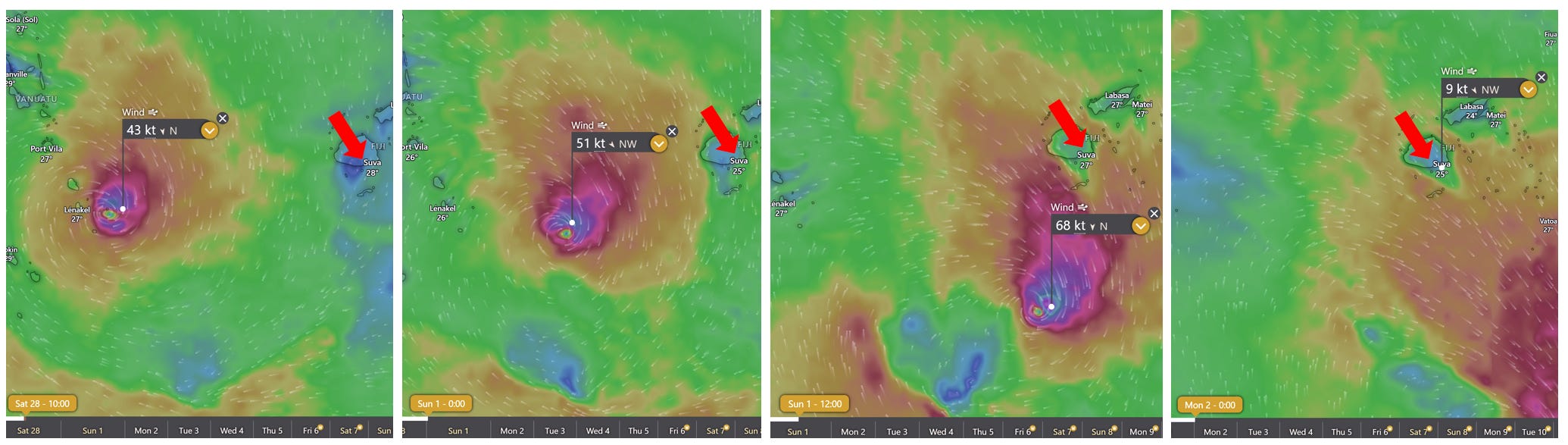
So far, it looks like the prediction that this is a neutral year for cyclones is accurate. We have all appendages crossed for it to continue.
Your letter this week prompted so many thoughts. Travel certainly has changed, and as you so eloquently illustrate - not always for the better.
In answer to your question, the influencer craze has infiltrated the sailing world, complete with the base element of instagrammableness1. Rather than an old wooden doorway, it’s that perfect couple with their perfect children posed on the bow of their catamaran (always a catamaran), somewhere in the tropics. This is the sailing version of what you called textbook Instagram: the ‘let’s pretend we are hard core ocean adventurers, while all we are doing is trying to get the more likes shot’.
Sidebar on this topic - The OGs of sailing channels started on YouTube, long before Instagram. The most successful of these quickly realized they were showcasing an activity that everyone equates to beautiful tropical destinations and the ability to wear minimal clothing. The more they showed maximum ‘T&A’ - the more followers they gained. “Look, here’s how to tie a bowline (in my skimpy bikini).” Porn and gambling are two of the most profitable segments on the internet, and many sailing channels benefit from featuring soft porn content. Think the Sports Illustrated Swimsuit edition, but on a boat.
While some sailors might zip around the world on a one year circumnavigation, most are on a check list trip that will last a season or two (always with a hiatus where the boat gets parked in a marina so they can go “home” for the holidays). Then the sail will be over, and the other sale begins. The one where they sell the boat.
And social media being what it is, there are a number of sailing influencers who never leave sight of land, never spend a night at anchor, never do an overnight voyage, yet still make out like they are discovering new continents. Rather than focus on soft porn to attract clicks, they tend to favor the scary headlines: “We dragged anchor! We went aground! Our sail ripped!” These OMG moments create clicks, and if that’s the goal then you can always surface the negatives and make it all seem so dangerous. If it bleeds it leads, right?
I have a favorite saying, “On the internet no one knows you’re a dog”. I’ve been using that one for years with my communication clients - meaning that people can (and do) pretend to be anything they want to be online, and no one will ever know.
That’s true today, in spades.
Don’t get me wrong - I have the utmost respect for anyone who makes the jump from marina life and coastal sailing to cross an ocean, no matter how few articles of clothing they wear. It requires a lot of courage and at least a touch of know-how.
But just as competitive flight options and fewer travel restrictions democratized international travel, the availability of boats with longer range and faster motoring capability, equipped with advanced aids to navigation and always-on communication tools has taken much of the risk out of the equation for those less experienced to accomplish what used to be only possible for an elite level of talented sailors.
Over the past decade, we’ve definitely noticed the effects of this democratization of ocean sailing. It has become more crowded, and the same third reason you cited has entered our vernacular - “so you can say you sailed there.” Keep in mind, our idea of crowds is different than yours. Only 300 or so boats cross the Pacific Ocean from North America to French Polynesia each year, and there are estimated to be around 10,000 or so recreational yachts that are sailing offshore at any given time, so we are a pretty small number if you think in terms of the overall global travel market.
Some places are worse than others - you can choose to go to St. Barts for New Years and share an anchorage with thousands of others. But like travel on land, you can still find places that are not overrun with check list sailors, you just have to do your research and find the real stuff.
We choose the route less traveled. Last year we sailed from Mexico to Fiji, with stops in French Polynesia, American Samoa, and Wallis and Futuna, before making landfall in the Fijian archipelago. We were rewarded with days on end of expanses of empty ocean, being only the 30th boat to check in at the island of Wallis in 2025, and spending a week in an anchorage on an uninhabited island, inside an unsurveyed lagoon in Fiji.
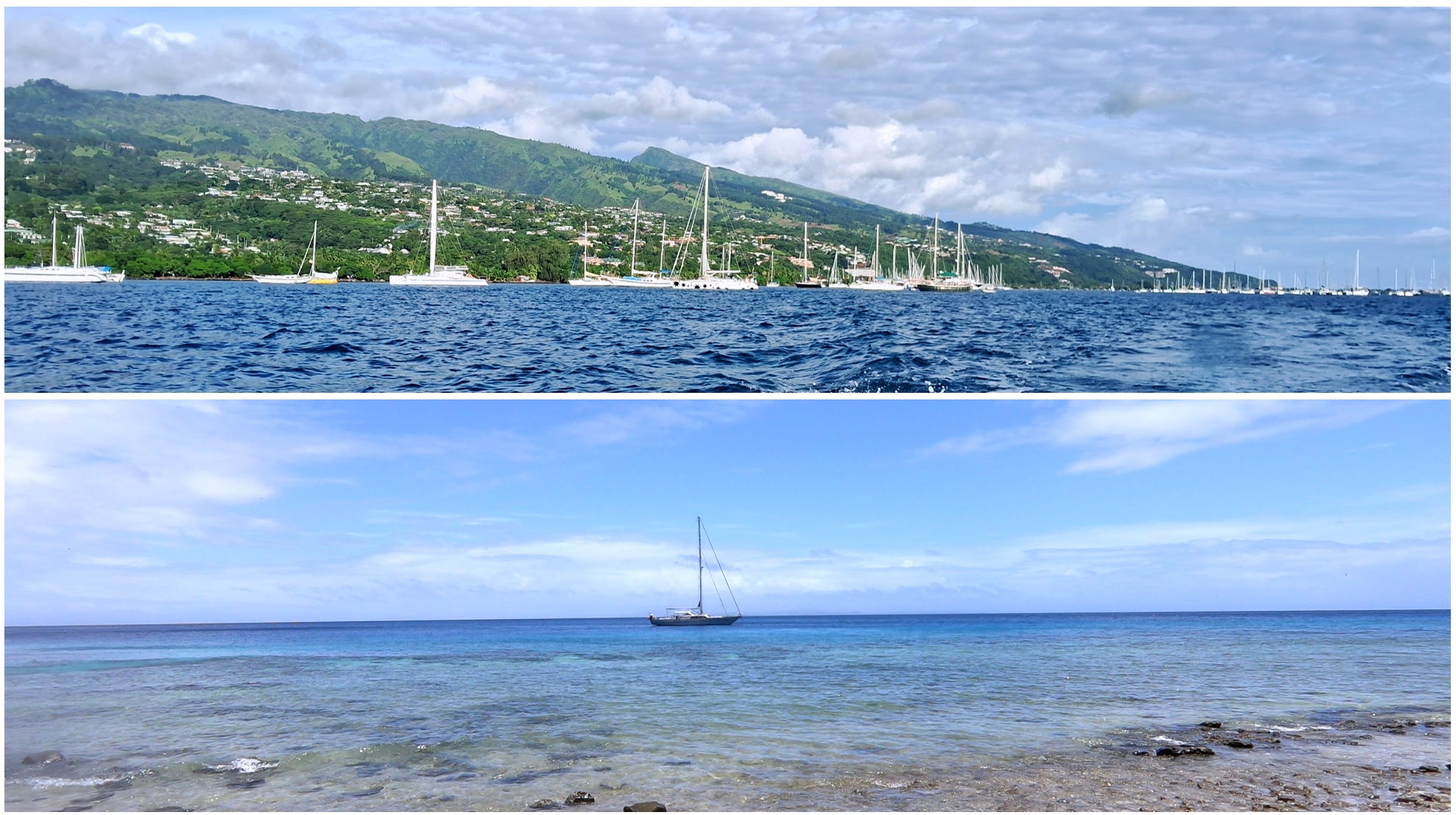
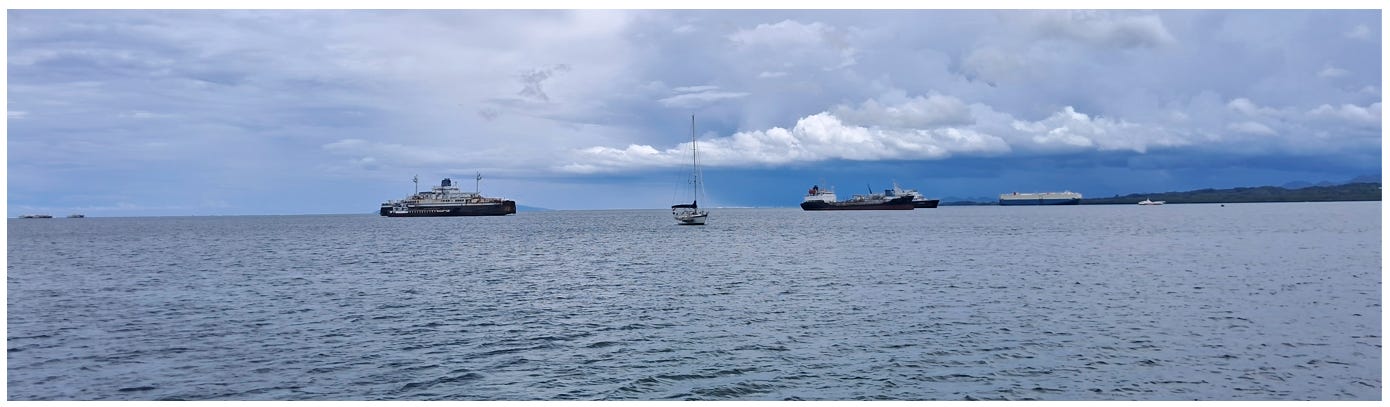
Today we are anchored in the Port of Suva on the island of Viti Levu in Fiji, with only one other recreational sailing vessel for company.
We meet many people who are bone fide adventurers - out here for the joy of sailing and the love of new horizons. We worship the OGs - those who did it first and will always have things to teach us - the sailing legends who pioneered ocean adventure long before social media such as Bernard Moitessier, Joshua Slocum, Robin Knox-Johnson and a host of others - as well as the modern day legends like John Kretschmer and Skip Novak, who are still out there doing it for the love of sailing. They also write books or make movies or documentaries, but they should! They are the real deal, not posers who care more about social media likes or clicks than they do about seamanship.
In answer to your question on whether the goal of a travel influencer is to create a perfect vacation for their audience or viral monetized content for them - I’m voting 100% on the side that it’s for the money. 100%. The disingenuity is palpable. I recently saw a hilarious photo of people lined up to take their turn posing in front of an ocean front vista, with an enterprising local charging them for the privilege. You pay, you get to the front of the line and strike your pose as if you are the only human for 100 miles, and none of your Insta followers know there are dozens of others lining up (and paying) to do it after you.
I feel for those poor souls that fall victim to the lure of those seemingly deserted beaches and perfect landscapes, but shame on them for not conducting due diligence or weighing their decisions against their personal preferences. There is plenty of opportunity to do the research and find the places that check the right boxes, without blindly following those click baiters to places they think they “should see”.
May you always be the Anti-Influencer, and keep promoting the real stuff with genuine connections and storytelling. You, me, and others in our nomad tribe have a wealth of experience to share. We are all more than happy to help others develop the ability to claim travel back from the algorithm, and experience authentic travel experiences to real places.
Let’s keep working on that, for everyone’s sake. Including the planet.
Until next time!
Your sailing friend, LJ
SV Duende
Currently anchored in the Port of Suva
Viti Levu Island, Fiji, Southern Pacific Ocean.
About the Pen Pal Series
The Pen Pal Series on Shellphone Chronicles features stories, questions, and unique experiences of other travelers — written from wherever we happen to be on the planet. Each open letter exchange pairs two different routes through life, shared in real time.
These pen pal letters are a throwback to the time before messaging and email, when letters sent by post were the only way to communicate 1:1. In those days, once letters left the writer, the words disappeared from the author and belonged to the recipient. In this electronic age, not only does the sender retain a copy, but it can be instantly shared with a host of others. It’s a phenomenal connection.
I hope you enjoyed Part 3 of Sea Level to Cruising Altitude. If you missed Parts 1 and 2, be sure to catch up here.
Part 4 of this series will continue in two weeks, when Nicola and I will continue our discussion about the Freedom of Travel: The ultimate reward.
If this unfiltered glimpse into our shared but different worlds provides you with a laugh, a new perspective — or a moment where you felt a little more alive, then we’ve accomplished much. We would love to hear what you think!
Sail on Fearless Crew! LJ
If you’re having fun here, why not keep reading?


About Shellphone Chronicles
I write weekly tall tales from the high seas that feature inspirational stories about exploration, adventure, self-reliance and risk, as well as lessons learned from living a remote life far off the grid. We are a crew of two, enjoying countless adventures on SV Duende, an 80-foot expedition sailing yacht on a multi-year ocean voyage.
To all my constant readers, thank you for coming along on this voyage with us. I love sharing our adventures with you.
If you are new to the crew, welcome aboard! I’ve put together a Start Here page on my Substack website — a roadmap to guide you through some of our most popular essays and provide a few binge-worthy series suggestions. It’s a fun introduction to the themes that we weave through our life of adventure on the deep blue sea.
While “instagrammable” has (sadly) made it to the Oxford dictionary, the term instagrammableness can be attributed to Nicola Volpi.
So far in my sailing adventure, currently in the Bahamas, I’m surprised by how relatively few people have a YouTube channel. Early on, everything I knew about sailing was from YouTube, so I thought they went hand in glove. I thought it would be at least 50/50! Haha. But i think there are still many people out here trying to mostly enjoy the moments, not just with a camera in their face 24/7 for all the world to see.
But that being said, basically everyone out here is super active on instagram — & I do think most of it is perpetuating a superficial jealousy feeling without showing the deeper, more nuance reality beneath the surface. That’s why I don’t post much on Instagram (people aren’t even interested in the nuance). And that’s why i’m so grateful for Substack, including Linda, for the ability to share something much more substantive.
Love the series, Linda & Nicola!
That was a great exchange of views on travel influencer culture. Much of what Nicola is describing are things I've seen too many times lately. Experiences rendered as caricatures.
The more I think about it, however, the more I remember the frustration I sometimes felt at famous places even thirty years ago, when everyone had to have their picture taken (albeit with a real camera) in front of or next to X to prove they had been there. So I guess the seeming parody of today is years in the making. It was just a lot less intrusive back then, and it wasn't about making money.